
🌱Field Notes: motherhood reflections, a toddler gut-healing recipe, and downsizing for more community

My son turned 4 recently, which is so wild. Watching him grow into a full-on little human has truly been the best thing. He is so sweet, endlessly curious, funny, free-spirited, and brings so much joy and adventure to our lives.

I haven’t really written a lot about my motherhood journey, partly because I was called to go inward and learn a lot about myself, and partly because a lot of it felt too raw to share up until now. My journey with nervous system and somatic awareness had already started before I became a mom, but raising a human being made it even more important to me to honor what was coming up and make space for it.
I’ve seen in my own life and practice that true health requires so much more than restrictive diets and probiotics — it requires deep purpose, meaning, social connection, and life alignment. Since becoming a parent, I have found myself far more focused on these bigger themes, and much less defined by work and a constant need to hyper-optimize my physical health. I am increasingly bringing that lens and balance to my work with clients and my writing.
🌱Personal/Clinical notes
I’m super thankful to have a healthy, happy kiddo. As I reflect on these last four years, here are a few things I’ve learned from my experience as a mom and in my work with clients with young kids:
The beauty of birth. After attending my niece’s natural homebirth, I knew we wanted something similar when it came time to think about the birth I wanted for my son. We planned a homebirth with an experienced local midwife. It was HARD, but the end was so beautiful, and I would do it a hundred times over. I was so happy to have our little boy. I basked in the afterglow of endorphins and sweet snuggles with our little one.
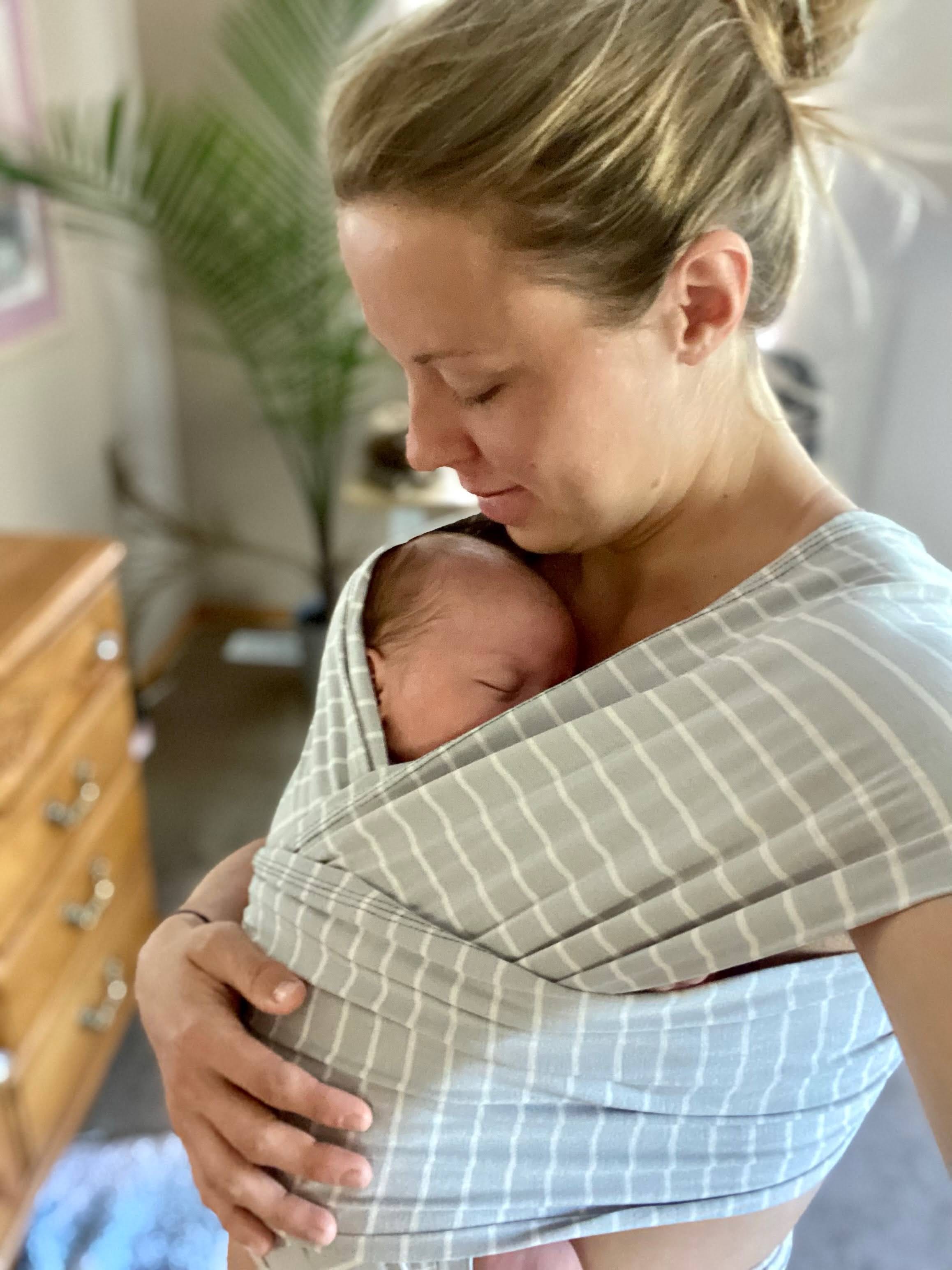
Surviving the colicky newborn phase. Despite knowing all of the “ideal” things to do for gut health, my son was a mildly colicky baby. I developed oversupply, and he refused to nurse to sleep for months 2 through 5. I literally had to do 300+ squats four times a day just to get him to nap! (We tried probiotics, including the most evidence-based probiotic strain for infant colic, and others, with little to no effect.) Sometimes I wonder if I had been more open to full-time pumping and using anti-colic bottles if that might have helped, just to see if it would have given his little system an easier time avoiding my fast letdown. He has a more sensitive temperament though, similar to my own (I was also a colicky baby). Watching him grow into the healthy, happy, regulated four-year-old he is today is the best reminder that the newborn phase doesn’t last forever.
The superpower of extended nursing. Despite our initial struggles, once my supply regulated, nursing quickly evolved into my ultimate parenting tool. I could stay out at a late-night bonfire and nurse my son to sleep, use nursing as a snack if I forgot to pack food on a hike, or offer an extra nursing session to give him an extra boost of security before a new experience (e.g. school, dentist, doctor). I know that breastfeeding can be a complex journey and looks different for everyone, but I am incredibly grateful that things smoothed out as he got older and I have been able to nurse as long as we did.
Iron repletion in infants/toddlers. Even mild iron deficiency can impact things like sleep and dental health. If iron is low, try to emphasize meat intake by offering it as the first course of the meal, and avoiding dairy for that entire meal (since calcium inhibits iron absorption). A little bit of ketchup or BBQ sauce made from clean ingredients can go a long way for pickier eaters. Desiccated beef spleen (I like Ancestral Supplements) mixed in applesauce once or twice a day is also a great option for repletion with highly bioavailable heme iron.
Allergy testing for toddler eczema. My son developed a few small patches of eczema when he first started nature school last year. I suspected it might be food-related and requested a referral for skin prick testing, which identified he had a moderate (non-anaphylactic) allergy to tree nuts. Cutting out nuts, plus doing the gut-supportive “honey medicine” below, cleared his skin up completely within a few months. According to the nurse who did the test, my son (then 3) was their youngest ever patient to undergo skin prick testing, which completely amazed me given the prevalence of eczema-related food allergies in young toddlers, how well he tolerated it, and how much the results helped us to quickly identify the culprit behind his flare.
It takes a village. Everyone says it, but you truly don’t comprehend it until you’re in it. During my second trimester of pregnancy, we moved to West Michigan with dreams of homesteading on a few acres, which meant choosing a bigger house than we really needed in a more rural area 20 minutes from town. It ended up being a huge mistake. We felt incredibly isolated for the early years of parenthood, especially with a baby who hated the car seat and little community built in a new area, and the sheer weight of the nuclear family ended up being more than we’d bargained for.
For those who are solo-parenting, managing complex health challenges, or just trying to keep your head above water, the idea of building community might feel out of reach right now. But if there is any creative way to piece together even a small bit of support, it can really lighten the entire load. We were never biologically meant to do this alone.
Cohousing makes for happy, healthy kids and parents. Last summer we sold our house in the country and moved into a small two-bedroom apartment close to town. My main criterion was to find somewhere with free-range kids (and hopefully some community for us, too), and ideally close to a nature school. The apartment was originally supposed to be temporary while we found our next spot, but it turned out to be everything we could have hoped for, and was immediately an amazing change for our family. While we don’t live in an official, intentional cohousing community, our little courtyard has come to function like one: we know our neighbors well, share meals and snacks, and the kids all run free in the green space between buildings.
After reading Peter Gray’s work on the benefits of free-range, multi-age play, getting to watch it happen naturally outside our front door has been incredible. The amount of free time and breathing room it has given us back is enormous, and we are so much less isolated than we were the first three years of parenthood.
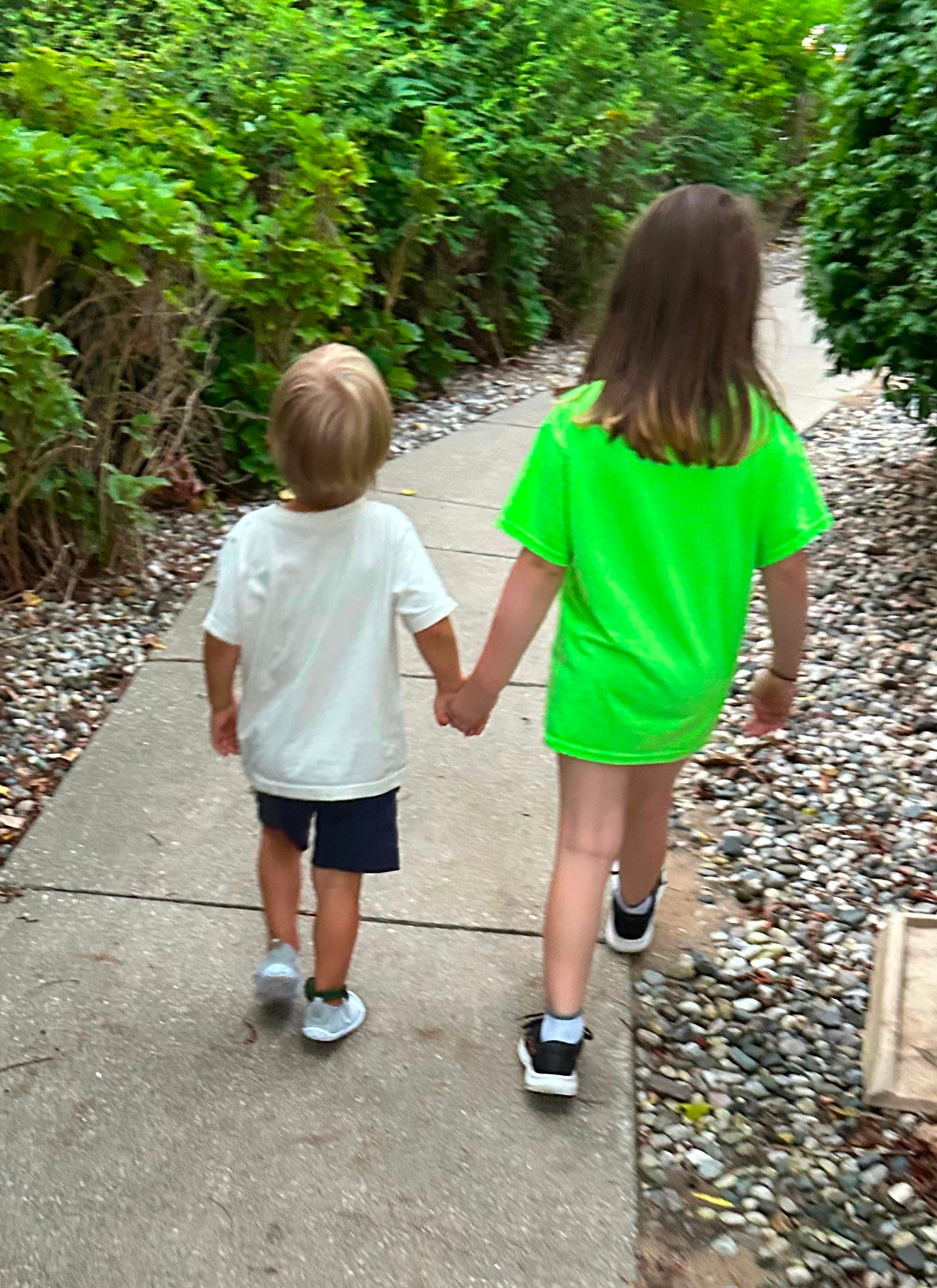
Living with less. I also love the simplicity of living here. Less to maintain, less to clean. Lower monthly costs. Just enough space, lots of quality time together, and easy access to the beach, nature, and town. I wish I’d known going into parenthood that we would need community far more than we needed acreage. I know others who have experienced similar boosts to their family’s health and happiness by shifting to an environment with more built-in community and free-range, multi-age kid playgroups.
🍯Toddler gut-supportive “honey medicine”

It’s been fun to teach my son little bits about the microbiome. We talk about “good germs” and “bad germs” in his tummy and how the “good germs” take up space and fight off the “bad germs”. We also talk about which foods feed our “good germs” (i.e. fruits and veggies) and which ones (i.e. sugar, processed food) feed our “bad germs” if we have too much.
This is the gut health support that I gave to my toddler daily during his eczema flare, and still give to him a couple times a week. He loves it and reminds me sometimes when I forget!
1/2-1 scoop butyrate (Tesseract AuRx or similar, see below)
1/2 tsp fish oil (Nordic Naturals or similar)
1/2-1 capsule probiotic, emptied (Seeking Health Probiota Bifido, Smidge Infant Probiotic, or Visbiome)
1 gram creatine monohydrate (optional)
1/2-1 Tbsp raw honey
Stir all of the ingredients together in a cup and serve it with a spoon.
Other variations: SBIs, pomegranate husk powder, other probiotics, zinc, Vitamin D. You can also substitute liquid tributyrin (e.g. 1 tsp of Pure Encapsulations SunButyrate) for the butyrate, but it doesn’t mix quite as well. I have no affiliation with any products mentioned.
📚 What I’m reading next
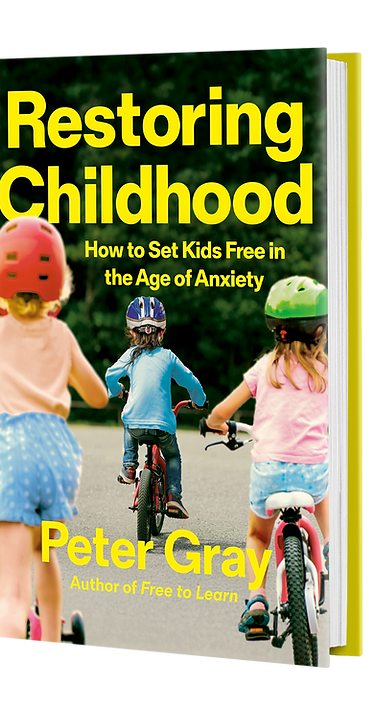
I’m super excited for Peter Gray’s new book, Restoring Childhood: How to Set Kids Free in the Age of Anxiety, which comes out in a few months. His first book, Free to Learn, was highly influential for me, both as it relates to my own path creating a life of independent research and science writing, and also in how I’ve chosen to raise my son. I’ve been following Peter’s Substack ever since and am excited to see what this new book has in store.
A few other reads I’ve enjoyed lately:
Elena Bridgers on the frequency of communal nursing (including relactating grandmothers!) in hunter-gatherer societies. Her articles center a lot around ancestral motherhood.
Gift from the Sea by Anne Morrow Lindbergh. A meditation on the need for solitude, self-care, and the different phases of her partnership through seasons of motherhood. A surprisingly easy and enjoyable read.
I hope you found some of this helpful or useful, especially if you’re a parent. And if you’ve had any major ‘parenting hacks’ or community shifts that has helped your nervous system or quality of life lately, I’d love to hear them in the comments below.
Wishing you all a wonderful week,
Lucy
Hi Lucy,
Which brand of pomegranate husk powder are you using these days?
Is there a reason you don’t give your son Evivo? Isn’t this the one with clinical evidence? What is pomegranate husk powder for, please? Also, have you tested his gut to see that he is low on biffido’s that you supplement? I know in the US Tiny health always seem to suggest smidge I guess from anecdotal evidence as they don’t list their strains which I find odd! Thanks